Clothing Brand Invoice Template

Free invoice templates for Clothing Brands built for style and size details, unit prices and discounts, and shipping charges. Download and edit in PDF, Word, Excel, Google Docs, or Google Sheets.

Also called: clothing brand invoice, clothing brand bill, or apparel co invoice.

Download Free Clothing Brand Invoice Templates

Download a template, then edit in PDF, Word, Excel, Google Docs or Google Sheets. Print or email when ready.

Sheets, Excel, Word and Doc Templates Coming November 21, 2025.

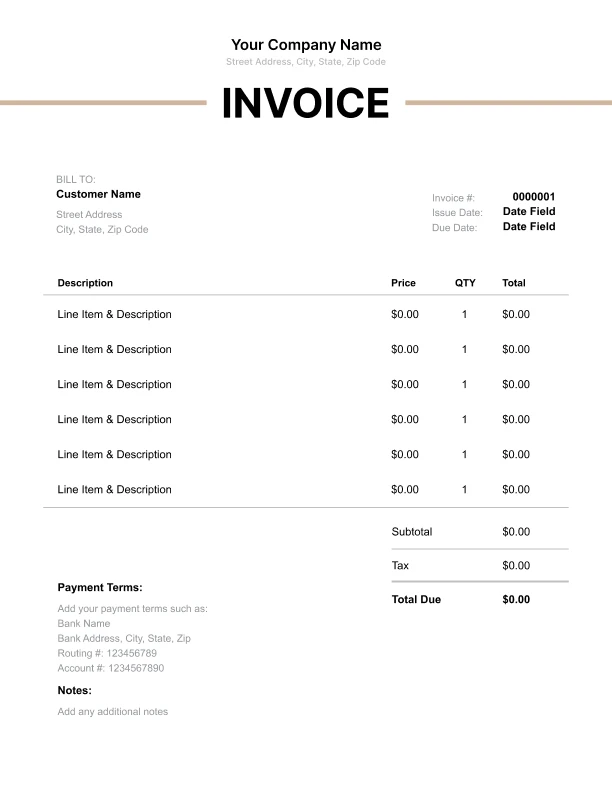
Custom Clothing Brand Invoice Template

Best for:
Logo, brand codes, line sheet fields.

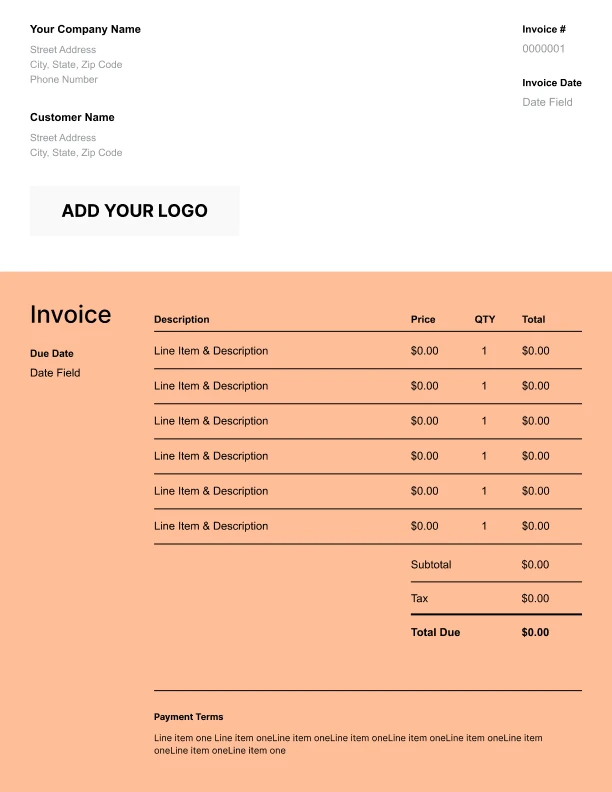
Printable Clothing Brand Invoice Template

Best for:
Totals, tax, ship-to, packing list ref.

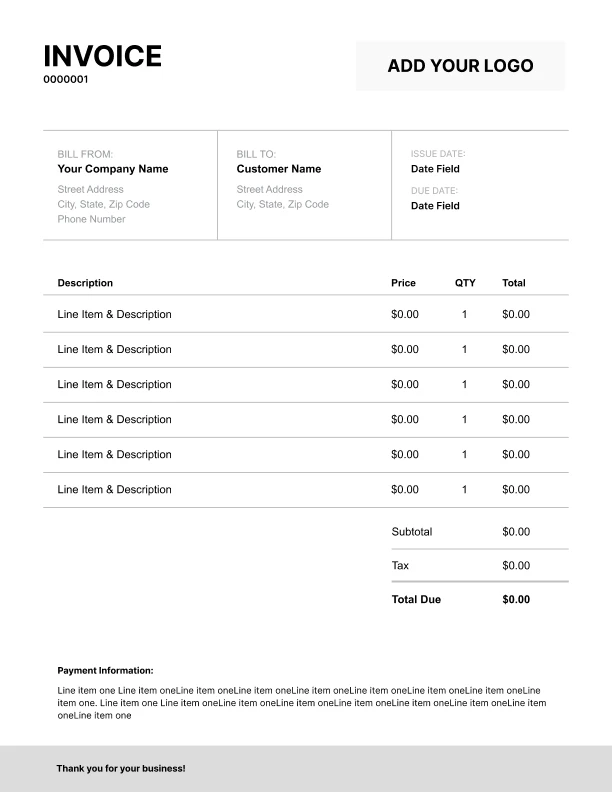
Editable Clothing Brand Invoice Template

Best for:
Edit variants, discounts, preorders.

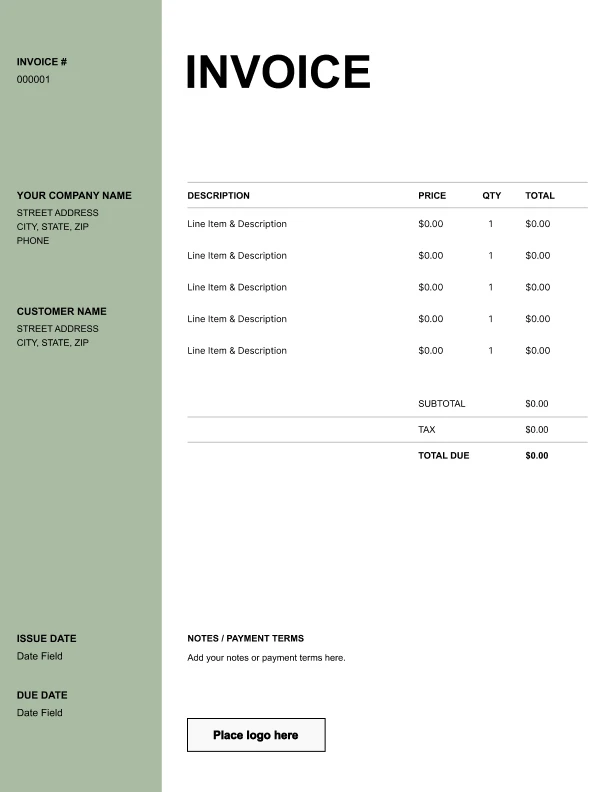
Free Clothing Brand Invoice Template

Best for:
Style, size run, color, cost, wholesale.

How to Invoice as a Clothing Brand

Use this simple flow to bill cleanly from order to delivery.
Free Online Invoice Generator
☝️ No sign-in. Save as PDF.
In 5 Steps:
  1. Confirm the order, sizes, colors, prices, and timeline in writing.
  2. Create the invoice with itemized SKUs and per-unit pricing, and set a clear due date.
  3. If made to order, request a deposit and record it as a separate payment.
  4. When goods ship or deliver, add shipping and tax, then apply the deposit to the balance.
  5. Send the final invoice with balance due and follow up until paid.
Free Online Invoice Generator
☝️ No sign-in. Save as PDF.

What to Include in a Clothing Brand Invoice

These are the must-have fields for clear, compliant invoices.
  • Brand name, logo, and contact info
  • Client or retailer name and contact
  • Invoice number and invoice date
  • Payment due date and terms
  • Bill-to and ship-to addresses
  • Itemized products (SKU, size, color, quantity, unit price)
  • Deposit received or payments applied
  • Balance due
  • Shipping method, cost, and tracking number
  • Sales tax or VAT rate and amount (check local rules)
  • Business tax ID or seller permit (check local rules)
  • Return policy link or RMA instructions

Billing Scenarios for Clothing Brands

How to label charges so every invoice makes sense the moment your clients see it.

1.
Production Deposit; Balance Due
Wholesale order with production deposit
Shows the upfront payment and the final amount so the buyer sees how the deposit is applied.
2.
Setup Fee; Per-Unit Print
Custom print or embroidery setup
Separates the one-time setup from the per-piece charge.
3.
Sample Pack Fee; Shipping
Sample pack sent for approval
Makes it clear the samples are paid and shipping is not part of product cost.
4.
Rush Fee; Priority Shipping
Rush production request
Set a specific calendar due date and simple terms like Net 15. Show late fees or interest only if allowed.
5.
Shipped Items; Backordered Items
Partial shipment due to backorder
Clarifies what was sent now and what remains open.
6.
Merchandise; Duties/Taxes
Shows the product total separate from import charges handled by the buyer.
Free Invoice Generator
No sign-in. Save as PDF.
Create a Free Account
☝️ Risk-free 30-day trial.

Products and unit prices for clothing brands

Itemize style and size, unit prices, discounts, and shipping with professional invoice line items.

Charge or Service
Unit
Taxable
When to use
How to show it
Finished Garment Units
Item
Taxable
Fulfilling a wholesale or D2C order
Qty × unit price. Include style, color, size run, PO, and delivery terms.
Sample Garment (Client Keeps)
Item
Taxable
Delivering an approved sample to keep
Qty × sample rate. Mark as non-returnable and tie to style ID for traceability.
Design & Concept Fee
Time
Creating a new style or capsule
Hours × hourly rate. List deliverables and usage rights for clarity.
Tech Pack Creation
Time
Building specs, BOM, and measurements
Hours × hourly rate. Link to fabric/trims and version the file used for production.
Pattern Making
Time
Drafting the base pattern for a style
Hours × hourly rate. Note block used and seam allowances to avoid rework.
Grading & Fit Revisions
Time
Scaling sizes or revising fit after tests
Hours × hourly rate. Record round number and approvals to lock changes.
Cut & Sew Labor
Time
Producing units in-house or with partners
Hours × hourly rate. Note workstation, stitch class, and QC checkpoints.
Decoration Run (Print/Embroidery)
Item
Adding artwork to finished blanks
Qty × per-piece rate. Attach art ID and placement map to prevent misprints.
Labels, Tags & Packaging
Item
Taxable
Supplying care labels, hangtags, or polybags
Qty × unit cost × (1 + markup%). Specify materials and branding requirements.
Shipping & Freight
Item
Charging for courier, freight, or logistics
Pass-through as billed. Add carrier, service level, tracking, and ship date.
Save and reuse your styles, sizes, prices
Create a free account and save style SKUs, sizes, prices, and discounts once, so nothing gets retyped.
Create a Free Account
☝️ Risk-free 30-day trial. No card.

Common Clothing Brand Invoicing Mistakes

Invoices go sideways when details are fuzzy or missing. Use these fixes to keep cash moving and cut disputes.

Mistake
How to fix it
Leaving out a return policy leads to arguments and unpaid balances.
Link a clear return window, condition rules, and who pays return shipping. Put the policy near the totals.
Using vague product lines causes size, color, or style mixups.
List SKU, size, color, and style code for every line. Add a short description in plain words.
Add your business tax ID on the header and in your account profile. If registration is required, include the number and check local rules.
Set a specific calendar due date and simple terms like Net 15. Show late fees or interest only if allowed.
Inconsistent invoice numbers break tracking and confuse buyers.
Use a sequential, date-stamped format that never repeats. Keep it stable across platforms.
Not stating the defect claim window turns small issues into chargebacks.
State how many days buyers have to report defects and what proof you need. Provide a contact email for claims.

Clothing Brands Invoice FAQs

Billing for CMT, sampling, grading, retailer chargebacks, rush runs, EDI, and testing, line items, markups, and terms that speed up payment, clear answers.

How should I bill cut-make-trim versus full-package production?

Charge CMT as a per-unit make rate and list materials separately. Full-package bundles fabric, trims, and labor. Example: “CMT: 500 tees @ $6 = $3,000; Fabric: 600 yd @ $2.40 = $1,440.”

Do I charge for sample development, and is it credited to production?

Yes, bill fit, PP, and SMS samples. You can credit some or all against the PO once production proceeds. Example: “Fit Sample Set: 3 styles @ $150 = $450; Credit on PO #1842: -$300.”

How do I show fabric and trim sourcing markups?

List pass-through cost plus a sourcing fee or percentage. Keep it clean. Example: “Rib Knit: 120 yd @ $3.10 = $372; Sourcing Fee 12% = $44.64.”

What deposit and milestones make sense for a production run?

Typical: 50% at PO, 30% at bulk fabric in, 20% at shipment. Tie due dates to milestones, not hopes. Example: “Deposit 50% on PO #2207 = $8,400; Stage 2 30% at fabric received.”

How do I bill size grading and patternmaking?

Treat both as pre-production services with flat or hourly rates. Reference style numbers. Example: “Patternmaking Style 24-A flat = $350; Grading 7 sizes @ $20 = $140.”

What’s the right way to handle MOQ shortfall?

Add an MOQ surcharge when orders miss the minimum. State the rule on every PO. Example: “MOQ Shortfall Fee: 200 units x $1.25 = $250.”

How do I show retailer EDI, UPC, and compliance prep?

Itemize setup and per-carton/pallet tasks. Don’t bury them. Example: “EDI Setup (one-time) = $150; Carton Labeling 80 ctn @ $0.60 = $48; UCC-128 Labels 80 @ $0.25 = $20.”

How do I bill freight, duties, and brokerage on a landed order?

Either pass through at cost or add a handling percentage. Be explicit. Example: “Freight LAX→ORD = $740; Duties 9.8% = $612; Import Handling 5% = $67.60.”